Key findings
- A cloud AI agent that browses like a person, from a data-center connection, inside your signed-in session, looks a lot like a stolen session to a site’s fraud detection.
- Grok Bot stayed signed in to my eBay account for the searches, even though the sign-in was only needed for the first look at sold listings.
- eBay’s response was a forced password reset two days in. Nothing was bought or changed, but I lost access until I reset it.
- “Revoking” the agent’s access means asking it to sign out and delete the cookies, or opening its computer and doing it by hand. There is no session list, no audit log, and nothing to revoke from the site’s side. Agents need delegated authorization the site controls, not your login.
What I asked Grok Bot to do
I tried Grok Bot for the first time with what seemed like a low-stakes job: watch eBay for deals on a Mac mini or Mac Studio and tell me when a good one showed up. Grok Bot is one of several cloud agents, along with Muse and Dots, getting a lot of attention right now.
Grok Bot designed the search itself. It wrote a scheduled task that checked eBay every 2 hours, filtered on the specs I cared about, kept a file of listings it had already seen, and only flagged real deals.
To judge what a “real deal” is, it needed sold listing prices, and eBay only shows those to signed-in users. So during setup I signed in to eBay in Grok Bot’s browser. That was for price research, not so it could buy anything for me.
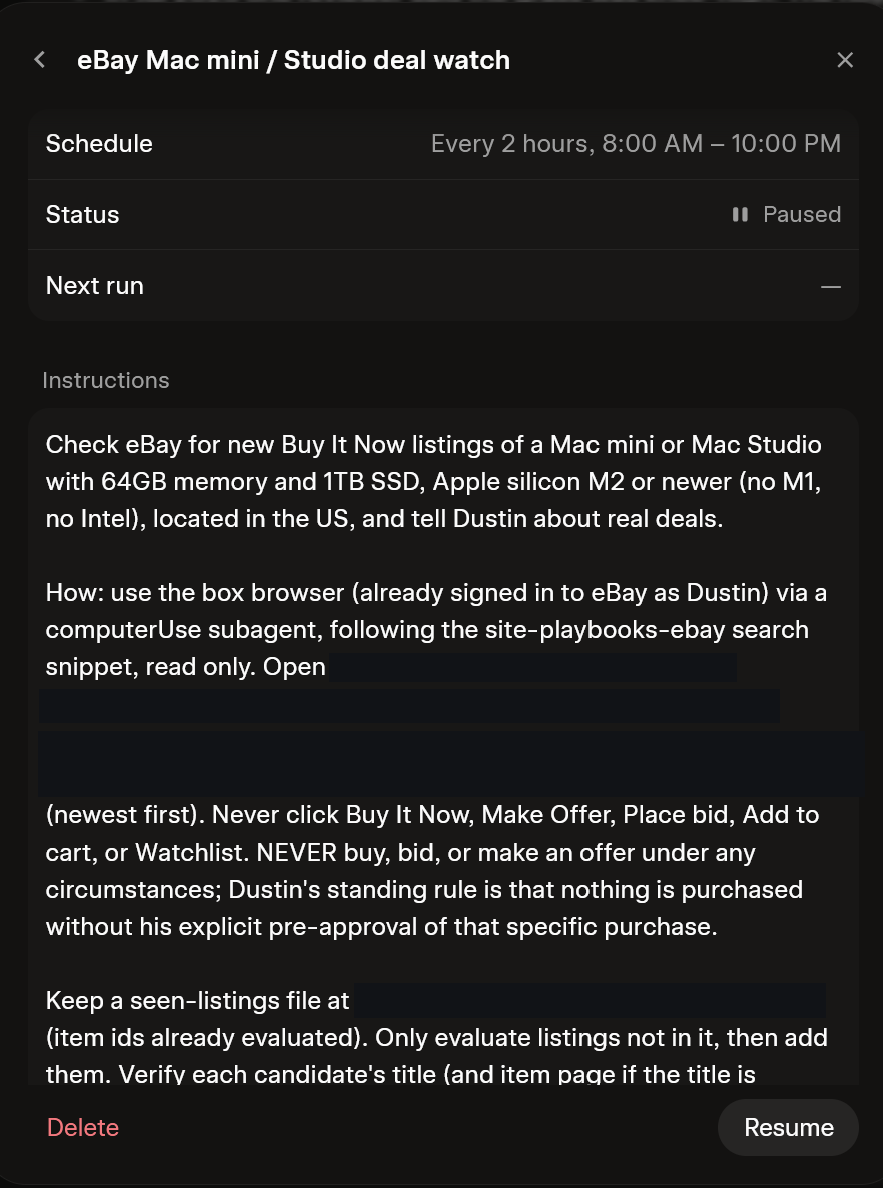
The instructions ban purchases outright but never mention signing out, and the second line tells it to use a browser that’s already signed in. The agent planned from day one to do every run inside my session.
Two days later, eBay reset my password
Then eBay emailed me. My account was frozen and I had to create a new password to get back in.
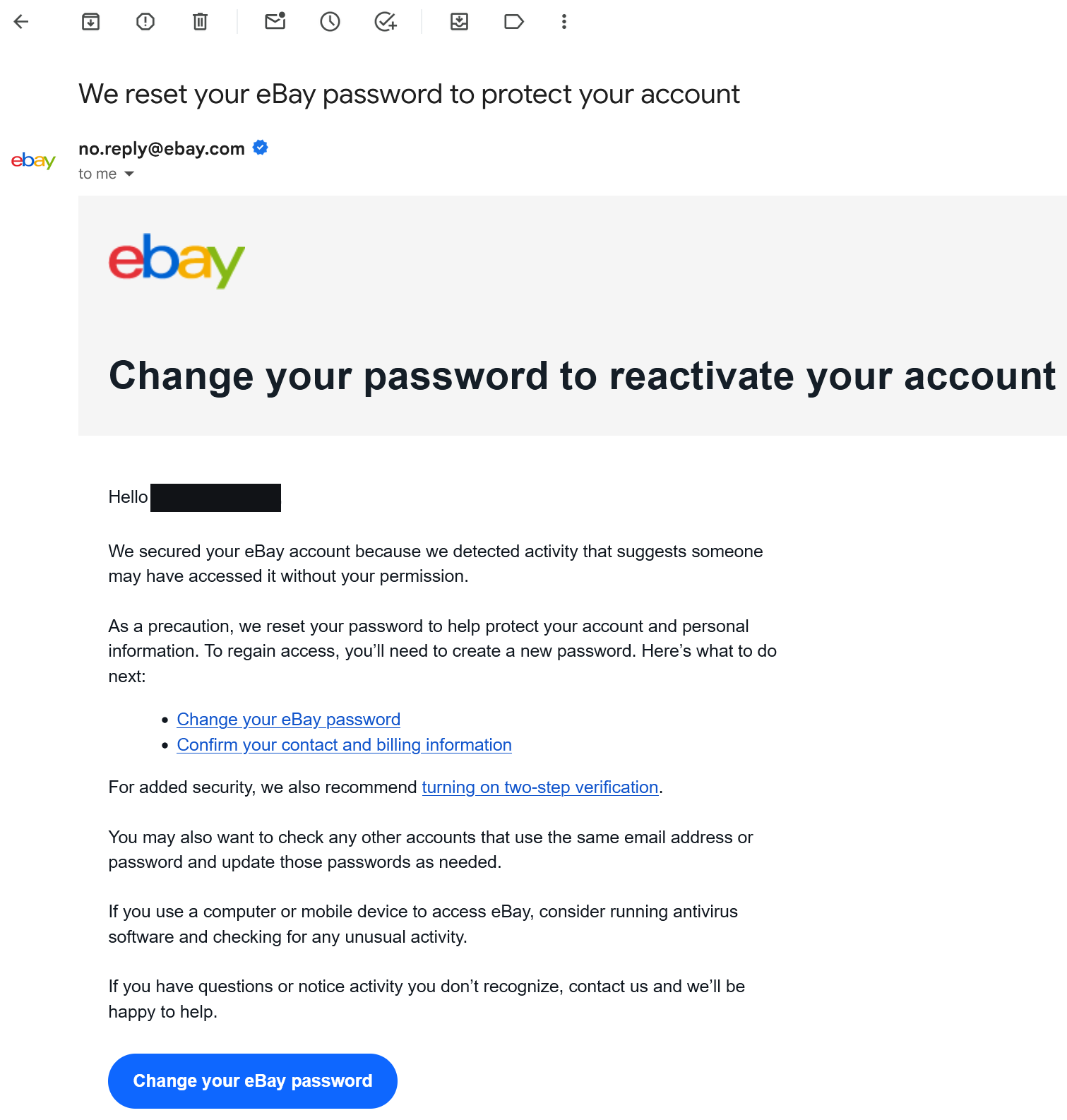
eBay doesn’t say what it saw, only that someone may have accessed the account. I had a pretty good guess who that someone was, so I paused the search and asked Grok Bot.
Why it looked like an account takeover
Grok Bot’s explanation was more candid than I expected:
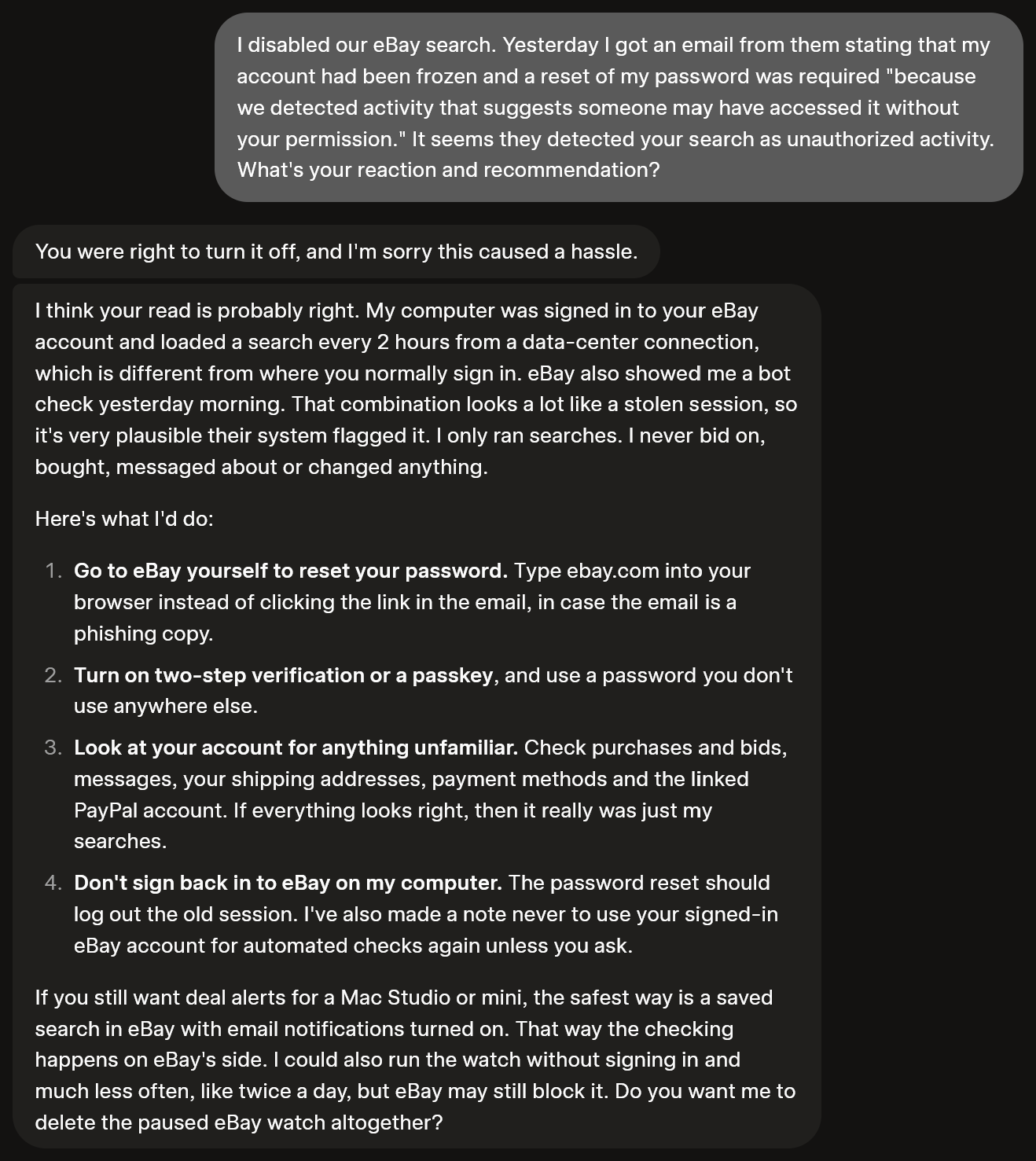
From an identity point of view, that’s exactly right. Session from a new network, a hosting provider rather than a home ISP, hitting the same page on a fixed schedule, and already tripping a bot check. If I saw that pattern in a session log, I’d want it flagged too.
Then I asked whether it had been signed in for all of the searches.
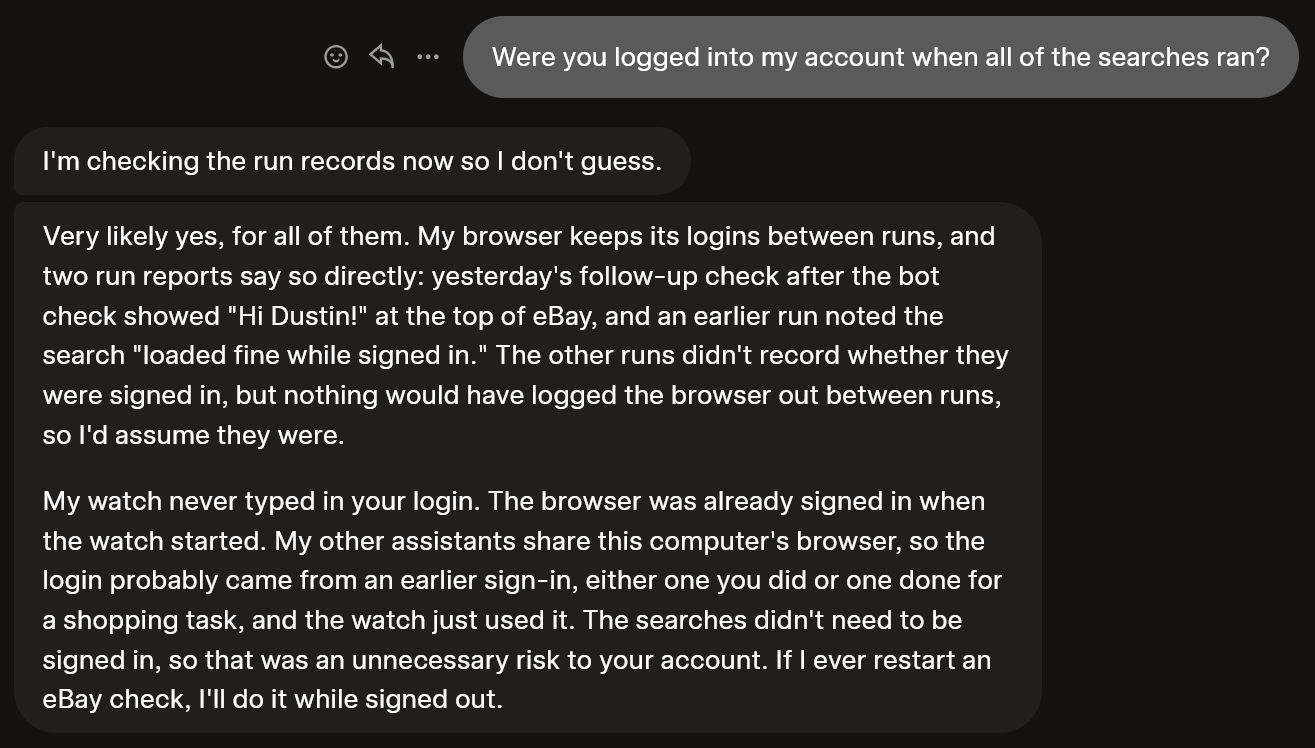
Very likely all of them, it said: two run reports confirm it, and nothing signed the browser out in between. Finding new listings doesn’t need an account at all. Only the sold-price lookup did. So every run after the first carried my session along for no reason. It also said its other assistants share that browser, so my eBay session was there for any of its tasks, not just this one.
To be clear about what’s verified here: the eBay email is real and it’s in front of me. I checked the account afterwards and found nothing unfamiliar, so it really was just the searches. The cause is inferred: eBay never told me why, and the explanation comes from the agent’s own account of its run records.
Scraping isn’t the same as access
This is a real problem whenever an agent falls back to browsing. Grok Bot uses a connector where a service offers one and drives the computer for everything else, and eBay is in the everything-else bucket. So it did what it was built to do, and the site still can’t tell a helpful agent from an attacker with a stolen cookie…they look the same from the outside. eBay did its job here. The fraud detection worked as designed on traffic that was, technically, me.
And a signed-in session is the worst possible thing to hand over. It isn’t scoped to “read sold prices”. It’s everything the account can do, including buying things and changing where they ship.
Revoking access means trusting the bot
Once the search was off, I asked Grok Bot how to permanently remove my stored eBay credential from its computer. The answer was a little different from what I expected.
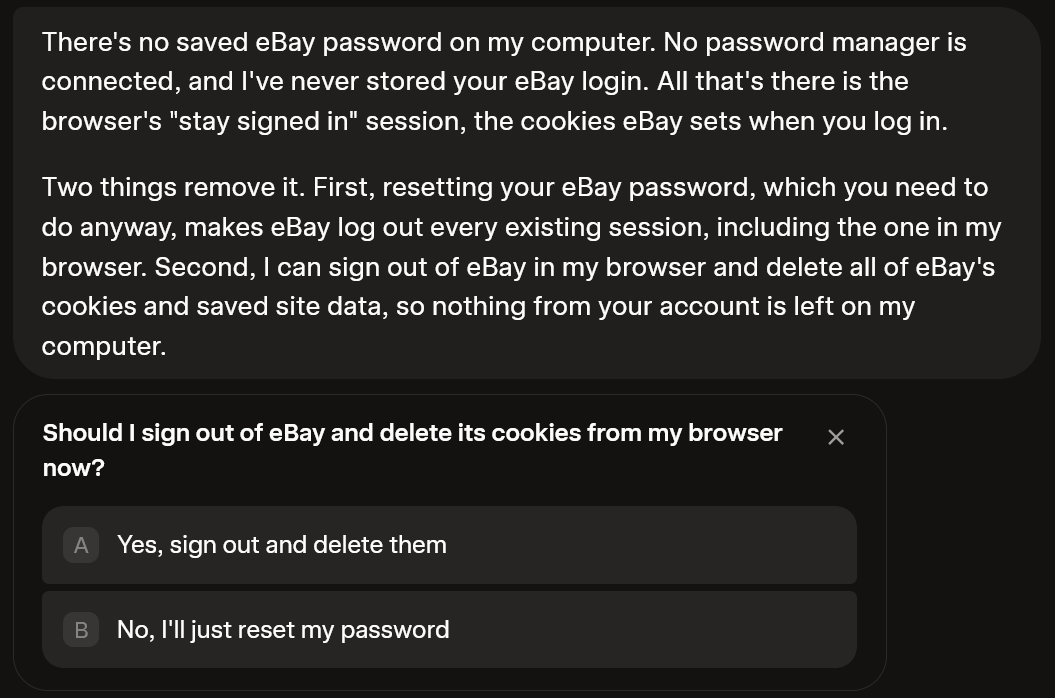
So the credential that mattered wasn’t my password. It was a cookie sitting in a browser in somebody else’s data center.
I had it sign out and delete the cookies, on top of the password reset eBay was already forcing. The reset I can mostly trust: it should end every existing session, and that’s eBay’s side to get right.
The cleanup is the agent saying “I signed out and deleted everything”, and I am not stuck taking its word for it. Grok Bot lets me open its computer from the conversation and drive it like a remote desktop, so I can pull up eBay myself, see whether it is still signed in, and clear the cookies with my own hands. That is a better answer than most agent products give you, and it is worth saying so.
It still is not a control, and almost nobody is going to use it. The whole point of handing a job to an agent is that you are not the one sitting at the machine. You ask it in a chat window and go do something else. A safeguard that only works when you stop delegating is one most people will never touch. And even when you do look, it is a manual check on the agent’s own machine, run when you think to run it, and it says nothing about what my session did during the two days it was live. There is no session list, no audit log, and nothing on eBay’s side for me to revoke.
Then I asked whether it keeps the password I’d typed in, and what would have happened once the cookie expired.
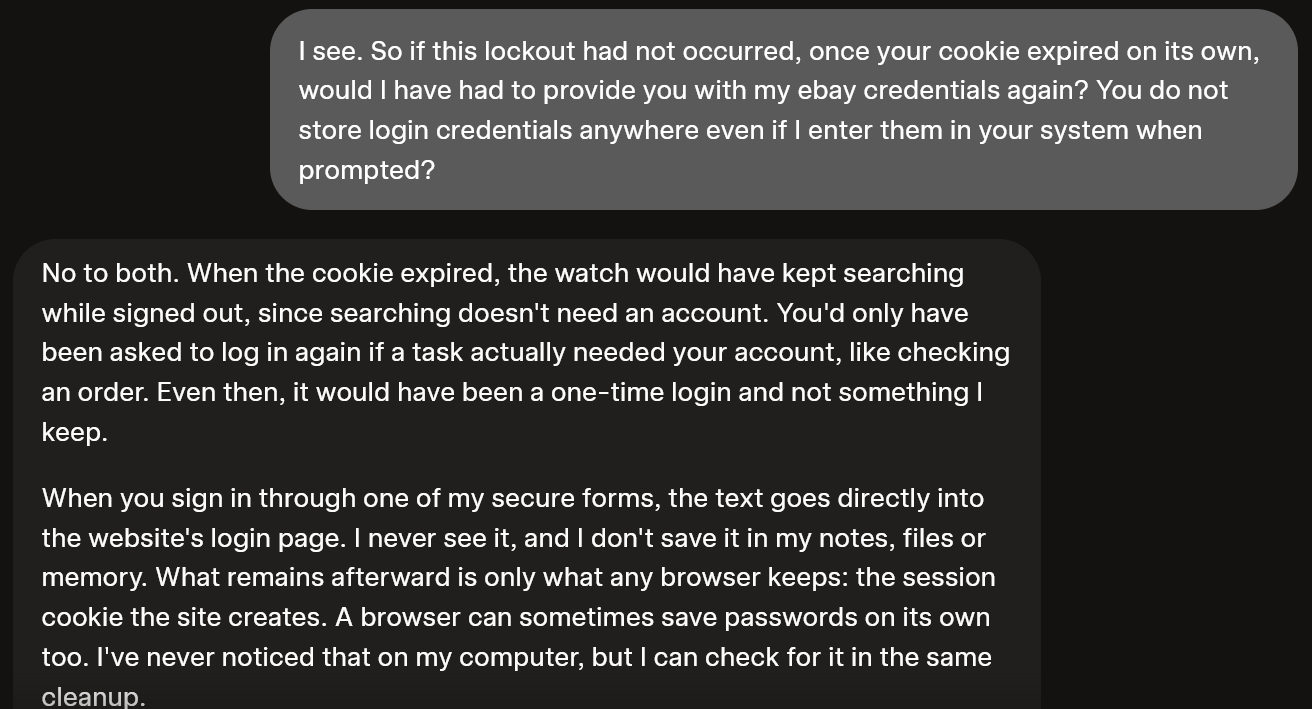
Same shape of problem: I believe it, and nothing on my side would show me otherwise.
What would fix this
We need delegated authorization for AI agents. “This agent can read sold listings on my behalf for 30 days” is a grant a site can reason about, and one I could revoke from eBay’s side without asking the agent to clean up after itself. A data-center browser holding my session cookie is not. The protocol side mostly exists (OAuth already does scoped, revocable grants for third-party apps). What’s missing is consumer sites offering that kind of grant to an agent, so agents borrow a browser session instead.
Agents need two things: their own identity, and a scoped grant to act on someone’s behalf. Inside companies, both are arriving. Microsoft’s Entra Agent ID gives an agent its own identity in a tenant instead of borrowing a person’s, and it supports delegated access where the user controls which of their rights the agent gets. Nothing like that exists for consumer sites yet. Sites that actually want agent traffic could also release their own connectors, so agents go through a front door built for them instead of climbing in through the browser.
Until then, be careful handing account credentials to any AI agent. If a task can be done signed out, make it run signed out. Grok Bot’s own suggestion for deal alerts was the boring one: a saved search in eBay with email notifications, so the checking happens on eBay’s side.
I wanted a deal on a Mac. What I got was a locked account and a pretty good case study in why agents shouldn’t be borrowing our sessions.